
What We Learned Releasing After the Act in Cinemas
Late last year, we released our feature film After the Act in cinemas. Set in Berlin over 24 hours, the film is a slow-burning drama that follows three friends as they navigate the quiet emotional fallout of love, intimacy, and the choices they can’t undo.
We had wanted to bring the film to cinemas long before we actually committed to it. I don’t care what Ted Sarandos’ son says, films are not meant to be watched on a phone. I’m tired of streaming and the endless carousel of disposable content that explains itself every five minutes for the distracted viewer. After the Act was made for silence and stillness, for people sitting together in the dark.
We had been watching other indie filmmakers take their films on the road, doing Q&As in arthouse cinemas and building small but meaningful theatrical runs. But those filmmakers were American, and America feels uniquely built for the travelling roadshow model. We were based in Europe with an English-language, slow-moving arthouse drama inspired by Éric Rohmer and Hong Sang-soo. Not exactly commercial fare. Not a genre piece. Not a documentary with a built-in audience. Still, we decided to try.
We focused on special Q&A screenings with the cast and crew and went to the cities that made sense to us – Vienna, where our lead actress resided; Berlin, where we shot the film; and Melbourne, where we’re from. The idea was to show up in person, turn the screening into an event, and make it feel communal rather than just another title in a busy programme.
But each city came with its own lesson.
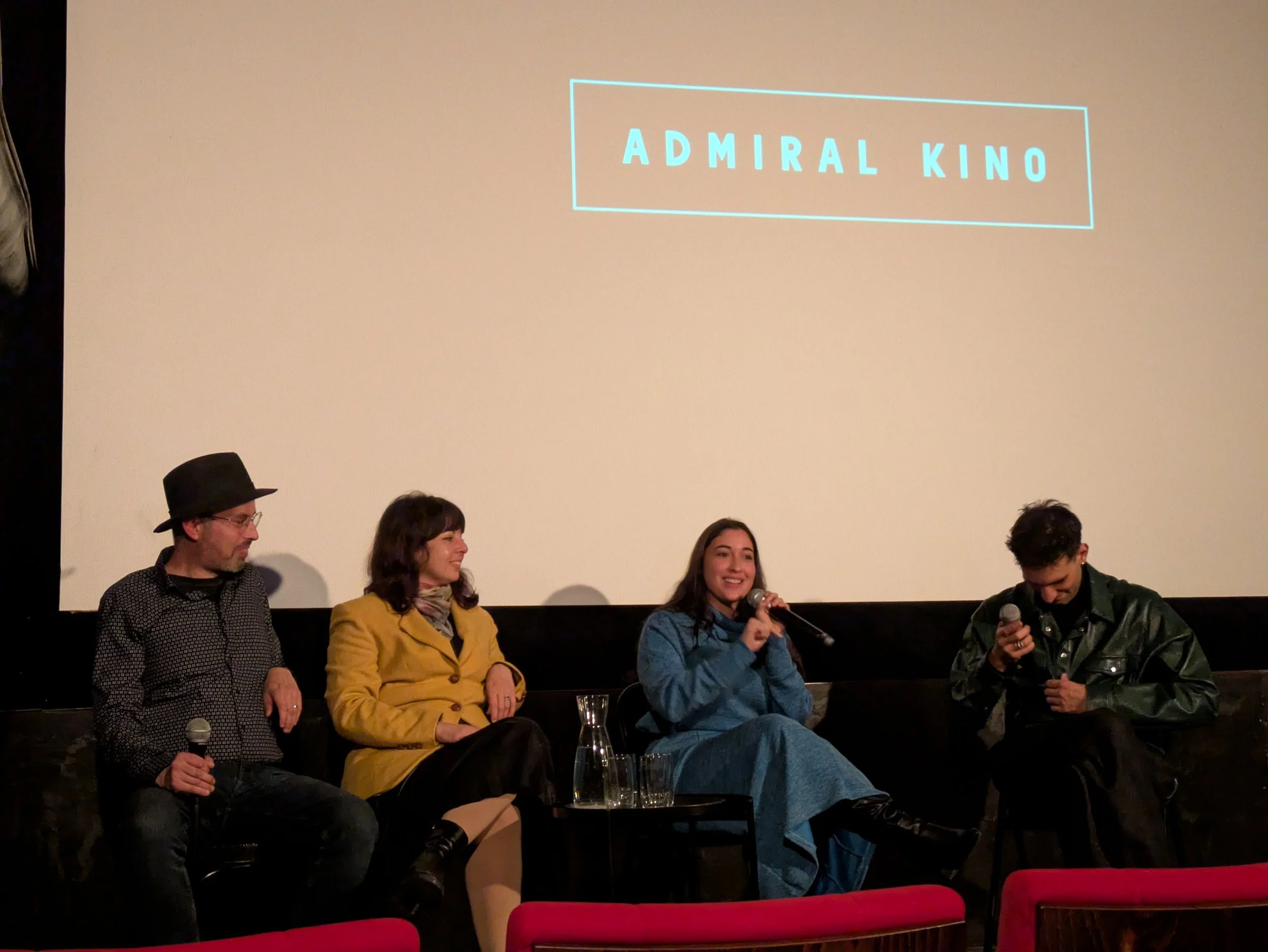
In Vienna, the cinema initially wanted us to rent the venue outright. The cost was prohibitive, the maths such that even if we sold out the cinema, we could only break even at best. So we refused. They came back with a compromise: use the cinema for free, but if we didn’t sell 50 tickets, we’d make up the difference. On paper, that felt like shared risk. In reality, we fell short and lost money. Not disastrously, but enough to be reminded that “no hire fee” doesn’t mean no risk.
Berlin was a straight hire. It was also the city where we had the most cast and collaborators actively sharing the screening, and it showed in the turnout. It was our liveliest crowd with people actually hooting at one of the more villainous characters. It felt electric in the room. That experience reinforced something important: you can’t promote a screening on your own. Personal networks matter. When the people involved in the film actively support the release, it creates momentum that marketing ads alone can’t manufacture. We even had a fan turn up with posters of our work he wanted us to sign!
And yet, we still lost money. Once you factor in the hire fee (€500), marketing, poster and flyer printing, travel and accommodation, you are always fighting an uphill battle with the numbers.
Melbourne was the only place where the logistics worked in our favour. We pushed for a 50/50 split on ticket sales rather than paying a hire fee and the cinema agreed, even giving us a ten-screen run. It was the only city where the underlying model made sense, and the lesson here is simple: push for the split. Cinemas are understandably risk-averse and don’t want to carry the loss if an audience doesn’t show up. But for off-peak sessions, Monday to Thursday, the risk is often minimal, as how many people will they draw to a regular film anyway? If you can sell your film and sell your event, they may be more open than you think. It never hurts to ask.
Marketing is the part I’m still unsure about. Filmmaking groups are full of advice to do this or do that, be on this platform or that platform to go viral, but I am convinced nobody really knows what works anymore in this current oversaturated landscape and it is a lot of guesswork.
We ran a PR campaign in Melbourne. We didn’t land any meaningful press. That’s not a criticism of the publicist but more a question about whether traditional PR even moves the needle for small, intimate indie films anymore? It’s very hard for a thoughtful character drama to gain attention without prestige (major festivals and major stars), but we knew that going in.
We ran social media ads in Berlin and got great Cost-per-Click ($0.0230) on paper. By advertising standards, that’s fantastic. But whether they translated into actual ticket sales is much harder to measure. That’s the frustrating part. You can optimize numbers and still not know what truly worked and what did not.
We considered a poster campaign across Melbourne but again, the question was return on investment. The minimum quote we got was $1700 for an 400x A3 campaign across cafes, but would the cost justify the outcome? We couldn’t prove that it would, so chose not to go ahead. Instead, we printed our own flyers and walked around dropping them into cafes ourselves.

Ultimately, I think it's the cinema’s own ecosystem that matters most. Do they have their own newsletter? A regular audience and community? If a venue has loyal patrons who trust its programming, you’re not starting from zero.
Now, I know there are filmmakers who make four-walling work. Al-Saadiq Banks recently shared how he packed five theatres on opening night and built strong local momentum around the release of his film Sincerely Yours. I genuinely respect that hustle. But context matters. Banks wasn’t starting from zero. He’s a bestselling author adapting his own book, with an existing readership and audience.
It’s similar to the Iron Lung release. Markiplier didn’t stumble into theatrical success. With 38 million followers on Youtube, he brought a massive, highly engaged audience with him. When you already have hundreds of thousands – or millions – of people who know your name, the risk factor is reduced dramatically.
At the same time, filmmakers like Michelle Iannantuono have been candid about trying the same model multiple times and losing money, with rental fees alone costing close to $1000 per screening. Her version of the story, likely the reality for most indie filmmakers, doesn’t travel as far online.
And that’s the point. Every booking requires upfront investment before a single ticket is sold. And without an existing audience to mobilise, the gamble is heavier, a detail that often gets buried beneath celebratory posts about “packed screenings.”
It’s also worth noting that we structured our screenings to minimise risk wherever we could. Vienna was the only city we went out of our way to screen in. We were already travelling to Berlin to run the Shorts In Season Film Festival, and we were going to Melbourne to see family. In that sense, our “tour” wasn’t a pure roadshow. It was built around where we were already going to be.
Even Vienna made sense geographically, as it sits on the way to Berlin. We weren’t flying across continents solely to rent a cinema for one night. We tried to stack the odds in our favour and reduce travel costs wherever possible. If you’re considering a theatrical run, that kind of practical planning matters more than the romantic idea of taking a film on the road.
We were also prepared for cinema to be a loss leader. We wanted to present the film this way, and we set aside money to do it, fully expecting that we might not recoup it through ticket sales alone. The value wasn’t purely financial.
Hell, there was a time when even distributors treated theatrical that way. A limited cinema run created visibility, reviews and legitimacy, and the real revenue came later through DVD, television and international sales. The theatrical window built the perception of value. It wasn’t always where the profit was made.
In today’s landscape, that downstream safety net feels threadbare but the principle remains. For us, the screenings were partly about experience, partly about positioning, and partly about simply giving the film the space it was designed for.
So would we do it again?
Yes.
Financially, it wasn’t successful. But creatively, it was invaluable. We got strong reviews and audience feedback. In Berlin, hearing the crowd react exactly where we hoped they would was a rare kind of validation. In Vienna, the discussion ran for half an hour after the credits. In Melbourne, sharing the film with family and friends on the big screen reminded us why we make films in the first place.
There’s something about sitting in a room with strangers and feeling them respond together. Streaming doesn’t replace that. For all the spreadsheets and CPC metrics and hire fees, that communal experience still feels like the point. It’s why we continue to do what we do. It’s why we love making films.
Written by Ivan Malekin