
We’ve just returned home from twelve days in Budapest filming XChange, micro-budget feature #7, and we’re wrecked, half-sick, half-asleep, and already dreading the pile of gear waiting to be unpacked.
XChange is an intimate two-hander about Maya, a polished lawyer in her late thirties who’s holding herself together despite deep-seated pain, who hires Elli, a twenty-something high-end escort who’s mastered the art of burying her own emotional baggage. What begins as a no-strings encounter shifts into a subtle struggle for power, vulnerability, and unexpected connection.
It’s the kind of European arthouse drama we love to make – performance-driven, minimalist, charged with tension and eroticism. On paper, XChange was designed to be simple. One main location. Two leads. A few exterior moments to break things up. A tiny crew. A laser-focused schedule. On paper.
But reality has a way of ripping that paper to shreds. This is what went wrong, what went right, and the lessons we learned.
Back to Scripted Filmmaking (And Why It Was Actually Nice)
For the first time in almost ten years, we made a film working from a full script. After so long using improvisation, returning to a proper screenplay was familiar and comforting, like putting on your favourite trackies at the end of a long day. Knowing exactly what the actors would say helped enormously with coverage and pacing, and the shoot carried a different kind of clarity because of it.
We’re not sure yet whether our future films will favour improvisation or traditional screenplays. Improv gives us a spontaneity we love, but the funding bodies we want to approach expect the formality of a script. Maybe the way forward is blending the strengths of both.
Location! Location!
The hotel room we booked as the main location looked perfect online – the elegance we needed, the wide balcony the script called for, the bath required for a big single shot scene we planned. But the photos online didn’t show the whole story.

When we arrived, the room was a lot smaller than expected. Much lower ceilings than I would have liked, making lighting a challenge. Mirrors and reflective surfaces everywhere, adding to that challenge, bouncing our lights back into frame like they had a personal vendetta. The bathroom layout was almost comedic: the bath shoved in a corner behind the shower, turning a scene I’d imagined as sensual and open into an awkward game of “don’t hit your elbow on the glass.”
We spent every day playing Tetris with our gear, moving it out of shot, moving the make-up setup from the bathroom to the bedroom and back again depending on where I needed to film next, tucking lights behind anything that would hide them, and accepting there would be some VFX clean-up in post for stands and wires and reflection because sometimes physics simply refused to cooperate.
Scheduling Pains
I usually pride myself on being able to schedule a film shoot. I’ve done it so many times that building an efficient, sensible shooting day feels second nature, and more often than not I even manage to get everyone home on time. Hell, I scheduled an entire feature to be shot in one night for Friends, Foes & Fireworks and made it work. But XChange was a deceptively tough film to schedule.
It was a combination of everything. We had multiple make-up and costume changes to account for, Budapest’s late autumn daylight disappearing just after 4pm, a mix of day and night scenes that refused to line up cleanly, montages scattered across the city, and time consuming tattoo cover-up on our lead actress that ate into any buffer I tried to build in. And then there were the intimate scenes and the emotionally heavy scenes – both of which you can’t rush, no matter how tightly you’d like the day to run.
I ended up with a seven-day straight schedule, something far from ideal. On an Australian union shoot it wouldn’t even be allowed, but for a micro-budget feature where a rest day would swallow money we didn’t have, it was the only option. It seemed workable. Then Day One happened, we slipped behind almost immediately, missing an entire scene, and the schedule was already doomed.
We didn’t make Day 2 either.
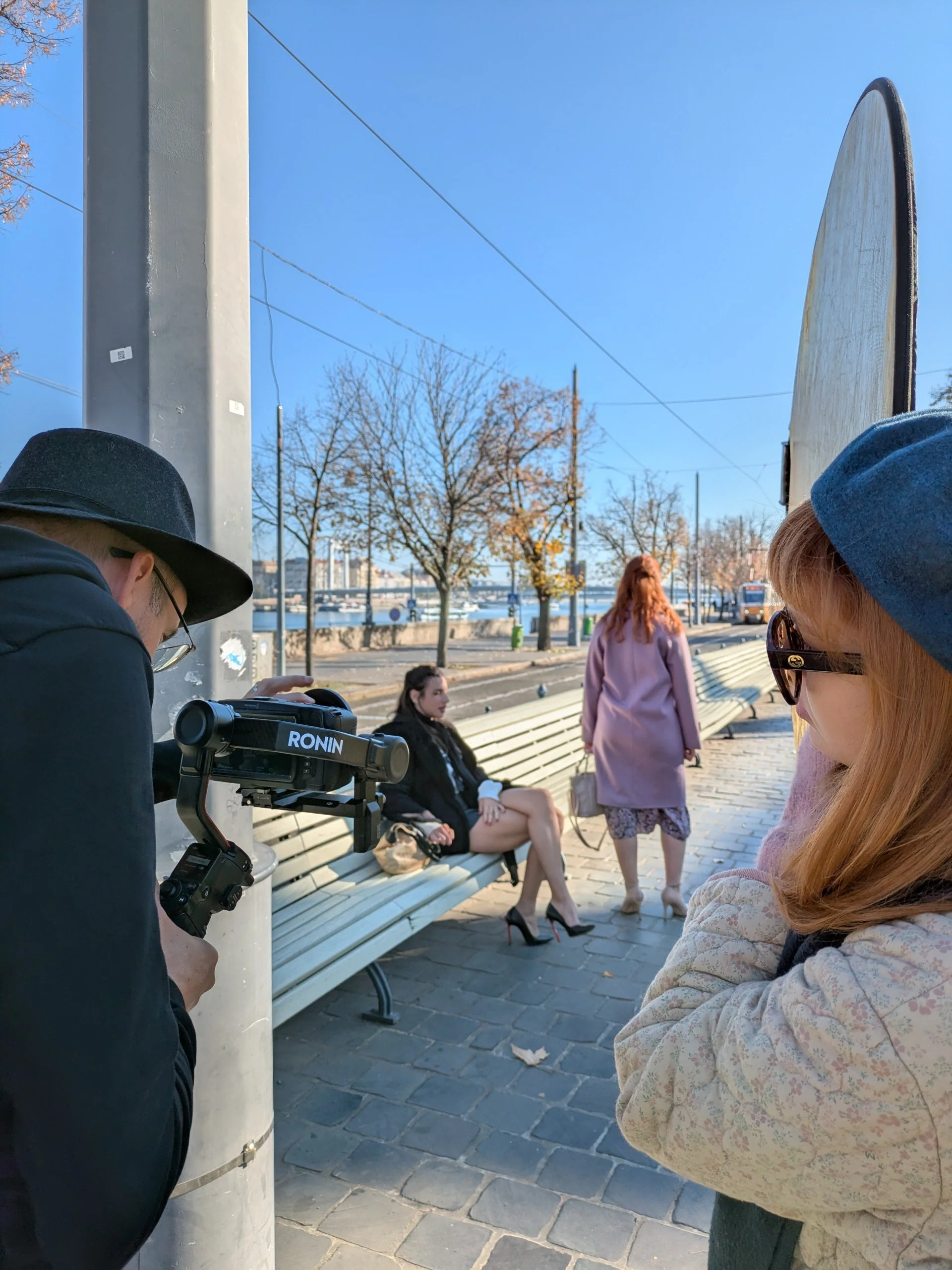
On Day 3 an outdoor scene was postponed due to rain, so the plan shifted again. When we finally filmed it, the clouds and sun kept trading places like they were actively messing with us, turning continuity into a painful little puzzle no one asked for.
By this point the schedule had become a fluid, ever-moving beast, and I genuinely doubted we’d finish before the hotel kicked us out. With one actress living in Australia, the other in Malta, and a flu hovering over the set, I had no idea what I’d do if we failed – I had no money left, the half-day contingencies were already spent, and the idea of reshoots next autumn was a nightmare I didn’t even want to consider.
It wasn’t until we wrapped Day Four and I spent a couple of hours tearing the schedule apart and rebuilding it from scratch that we finally began to catch up and claw back the scenes we’d lost.
In the end, we made it. Seven days straight. Twelve-hour days. Sometimes a little over. It was a brutal grind, and there were definitely moments when cast and crew got on each other’s nerves, but we got through it. We finished the film.
A lesson from all this: we should have had an AD. Funny, really, because just like working from a script, working with an AD is something I haven’t done in almost a decade. But trying to juggle the schedule myself – while also directing, DPing, producing, and doing a hundred other things – was a mistake. An AD would have kept us on track, protected our hours, and freed my brain from constantly calculating the day. I’ve said no to ADs in the past, but not every model of filmmaking fits every film, and I can see now how valuable an AD would have been on this one.
The Tiny Crew Model
On ForeFans in 2022 we filmed with a crew of only two or three people depending on the day. Pure multi-tasking madness. I said back then I was too old for that shit.
On After the Act in 2023 we stretched things to a crew of seven. Sarah and I co-directing, a DOP, a gaffer, a make-up artist, a sound recordist, and an associate producer/PA. It was so much easier, and for a moment it felt like we’d found the perfect balance for our particular brand of micro-budget filmmaking.
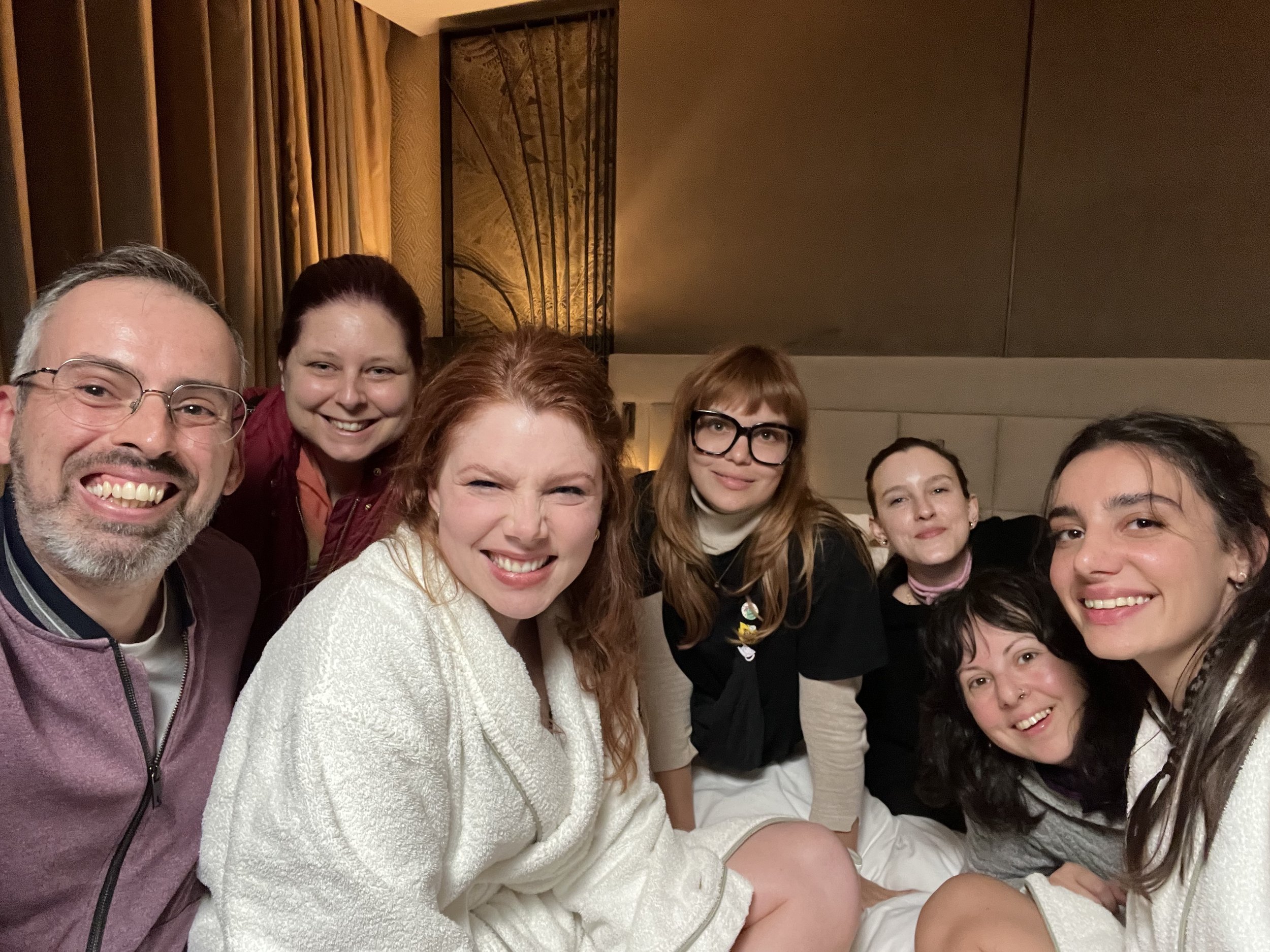
But as planning for XChange took shape, I found myself slashing crew positions once again. We were going guerilla on the streets and in the hotel room, and I worried a bigger crew would draw too much attention. So I stripped things back and leaned on the multi-tasking crutch again. Not quite the ForeFans level of insanity – but close.
The crew ended up being Sarah and me as producers and directors. On top of that, I took on the role of DOP/gaffer, while Sarah handled production design and costumes and sound. Our support was a production assistant/set dresser/caterer, plus a hair and make-up artist with a couple of trainees rotating in to help her. Four core people, essentially, plus one poor trainee trying to work out what sort of madhouse they’d stumbled into.
The planned sound recordist got replaced by a new sound recorder, a Tascam Portacapture X8. It was a massive improvement over our old, beaten-down Tascam DR-70D, which had become so unreliable it was barely suitable for YouTube videos anymore. And the X8 cost a third of what hiring a sound recordist would have, so it saved us money and kept our crew footprint small.
Whether axing a dedicated sound recordist will still feel like a good decision once we hit sound design… time will tell. But the takes I’ve reviewed so far have been solid. And on the day, when we weren’t entirely sure we had something clean, Sarah grabbed the mic and did some quick ADR on the spot, a safety net and a trick we learnt from reading Noam Kroll’s one-man-band approach to making a feature solo.
The planned collaboration with a DOP also disappeared, and I ended up handling the cinematography myself. This was the first film I’d DOP’d since Sugar in 2024 (a short I wasn’t entirely pleased with visually) so to prepare for XChange I found myself watching YouTube lighting tutorials like a guilty student cramming before exams. I had to relearn my own cameras, lenses, and lighting kit. It was nerve-wracking but after reviewing footage at the end of the shoot, I’m genuinely proud of how most of XChange looks, despite my rustiness and constant battle to place lights where I wanted in the cramped space.
Of course, there are a few shots where I look at the footage and think, “Why did I do that?” So I know there’ll be extra work to do in post to shape a final look I’m fully happy with. There almost always is on micro-budget films.
And the lesson here is one I’ve learned before, but XChange hammered it home again. I need more crew. I need less multi-tasking and more specialisation. When I think back on XChange, the feeling is relief – the same kind of relief I felt after finishing ForeFans. But when I think of After the Act, that was a joy to make. The difference is obvious. Filmmaking really is at its best when it’s truly collaborative.
The #1 Lesson: Enough With the Micro-Budget Features
And here it is. The big one. The real lesson. The thing XChange made impossible to ignore.
We cannot keep making micro-budget features like this – where we do everything ourselves, where every decision is a compromise, where every moment feels like a small logistical miracle. We’ve done it for way too long and we’re tired. Too aware of what this takes from us. I don’t want to sneak rubbish bags out to the dumpster every night because we’ve told the hotel “No housekeeping for seven days, thank you.” I don’t want to live in a constant state of favours, panic, and prayer that the money holds long enough to get through the final scene.
We want legitimacy. We want crew. We want to pay people properly. We want to breathe during production, not just survive it. We’ve built a career on not waiting for permission, on going out and getting things done by any means necessary. But now we want that permission. Permission from investors and funding bodies and distributors before we shoot a single frame.
We’ll happily keep making shorts when the creative itch needs scratching because I know it will need scratching. I love filmmaking too much to stop completely. But for the next feature, the goal is to raise funds properly, not rush into another war zone armed with grit and an oily rag alone.
We love making films. But it’s time we make them with the support they deserve.
Written by Ivan Malekin