
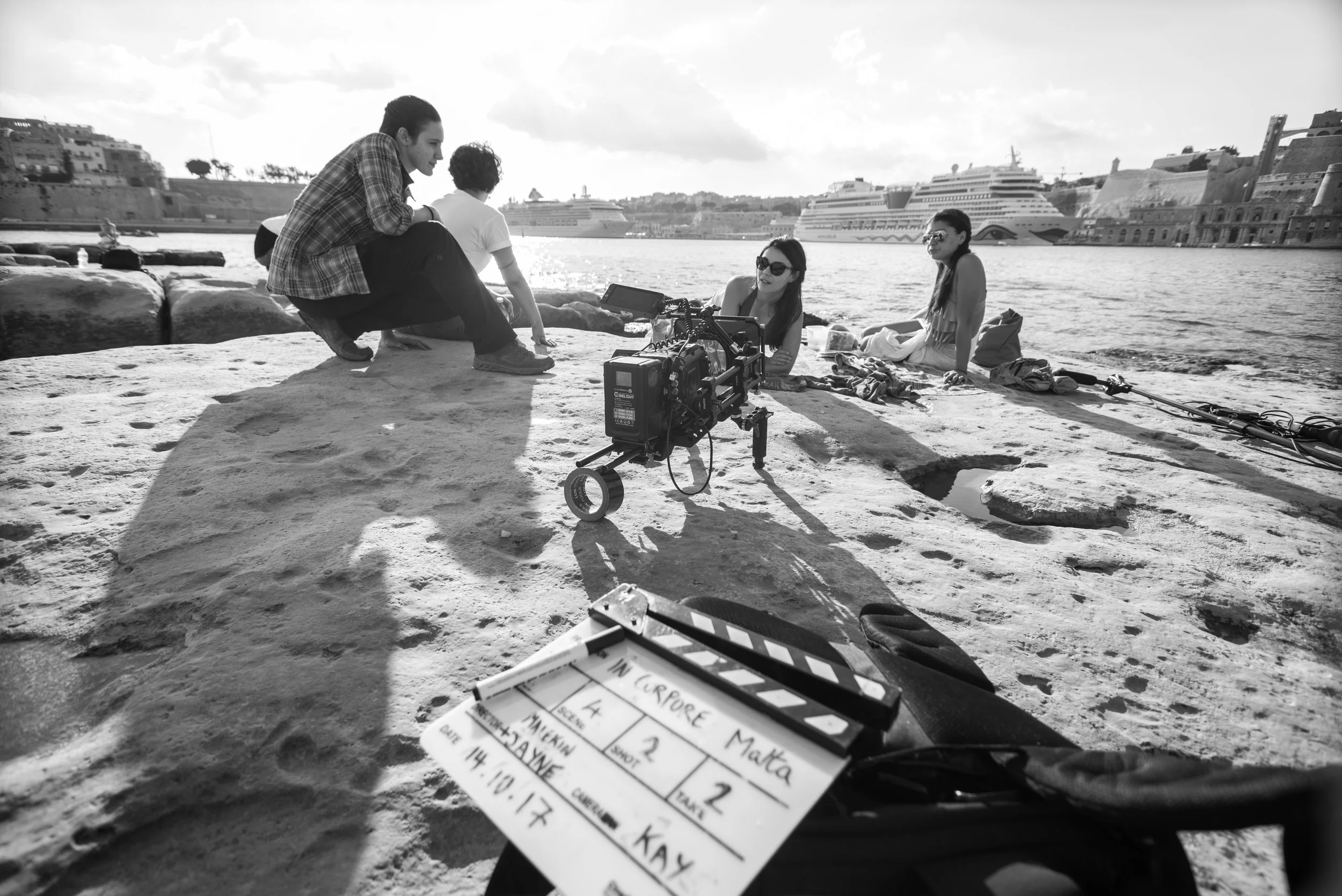
I’ve lived and worked as a filmmaker in Australia, Malta, Croatia and now Germany. Four countries with very different cultures, economies and film industries. I’ve also made films in America and several more European countries. And one thing I have realized is filmmakers complain about exactly the same things everywhere.
There’s no funding, the industry is too small, the government doesn’t support filmmakers. The same faces get all the opportunities, it’s all about who you know, nobody cares about independent film.
The details change, of course, but fundamentally the complaints are the same. Everyone thinks the grass is greener somewhere else.
Newsflash: it’s not.
And guess what? You have a right to complain. This industry is brutal and unfair. Film funding is ridiculously difficult to get. Nepotism exists and the same names do appear again and again. Governments could do more. Distributors have become increasingly risk-averse and streaming has completely disrupted the economics of independent filmmaking.
Sarah and I have been there too. We’ve had funding applications rejected over and over again. We’ve pitched projects that have attracted no interest from distributors or investors or networks. Our record at film festivals is laughably bad.
But this is filmmaking.
There are simply more talented people who want to make films than there are opportunities for them to do it. More directors than directing jobs, more actors than roles, more projects than funding. There are more finished films than distributors can take and more films being made than audiences could possibly watch.
It isn't an Australian problem or a German problem or a Maltese problem or a Croatian problem. It's filmmaking.
So bitch and moan and complain and get the frustration off your chest. Because it can feel good to bemoan how unfair it all is. But one of the dangers of complaining is that eventually it becomes a defence mechanism. Every rejection and closed door becomes evidence that the system is broken. Sure, it is broken, but what good does it do to join the chorus crying to the sky? Eventually you have to ask yourself a more useful question:
What are you going to do about it?
Quit? That’s an option. I don’t begrudge anyone who has had enough of the grind. We have been grinding for twenty years and sometimes we just want to touch some grass and play with our cat rather than worry about getting the next project off the ground.
But if you are like me, you soon realise there is nothing else you want to do with your life. The passion and urge to create always comes back eventually and you just have to find a way to get the next project off the ground.
Mark Duplass famously told filmmakers that “the cavalry isn’t coming.” It’s a piece of advice I keep coming back to because the longer I make films, the more accurate this feels.
Nobody is coming to give me or you a filmmaking career.
Still, that doesn't mean nobody will ever help you. We've had distributors take chances on our films. Most festivals shut us out, but the ones that do give our work a chance have our gratitude and support. Cinemas have opened their doors to us. Journalists and critics have said yes to that interview or review just by us continually asking. We've worked with wonderful actors, crew and collaborators around the world who have become dear friends.
You need those people. But you can't spend your life waiting for them.
Independent filmmaking has always been an exercise in solving problems with resources you don't have. We do it instinctively in the midst of production. Can't afford the location? Find another one. An actor drops out? Recast or rewrite the scene so they are not needed. Don't have the equipment you need? Find another way to get the shot.
Yet strangely, we don't always apply that same mentality to our careers. A funding body says no, a distributor passes, a festival rejects us, and suddenly the closed door becomes the end of the road rather than another problem to solve.
I recently saw a great example of this on Reddit. The Long Beach Film Festival accidentally CC'd more than 290 filmmakers on a rejection email. One of those filmmakers took the list and, instead of just complaining about the rejection, contacted their fellow rejects and started the Long Beach Film Festival Rejects Film Festival, a self-described “d.i.y. festival through and through.” They couldn't get into the festival they wanted, so they said fuck it and created their own with a humorous twist.
Now that is how you do independent filmmaking.
It reminds me of a quote from The Shadow of the Wind by Carlos Ruiz Zafón, one of my favourite books.
“Destiny is usually just around the corner. Like a thief, a hooker, or a lottery vendor: its three most common personifications. But what destiny does not do is home visits. You have to go for it yourself.”
Replace destiny with filmmaking and you can sum up how I feel.
Now I am not writing this as some inspirational piece or as a hollow “you can do it if you just believe” quote. Filmmaking can chew you up and spit you out the other side beaten down and embittered, especially if you spend all your energy raging about the hurdles put in your way. Instead, figure out how to get around them. Crawl if you have to.
That’s the reality of choosing an industry where far more people want in than there is room available.
There is no mythical country on the other side of the world where the film industry works the way filmmakers wish it did, where the funding is plentiful, where talented people naturally rise to the top, where distributors and investors eagerly take risks and everyone gets their fair shot. And if you think that is LA, then you haven’t read the endless industry downturn reports coming out of Hollywood over the last few years.
So instead of complaining, think about what you are going to do about it. Think of another way to get your film made. Think of another film to make if you have to. Think about how you're going to get your film seen. Fail if need be. Try something else. Try again.
Damn right, the cavalry is not coming.
So what are you going to do about it?
Written by Ivan Malekin